The Most Popular Youth Sports in America, and Which Are on the Youth Sports Quarters
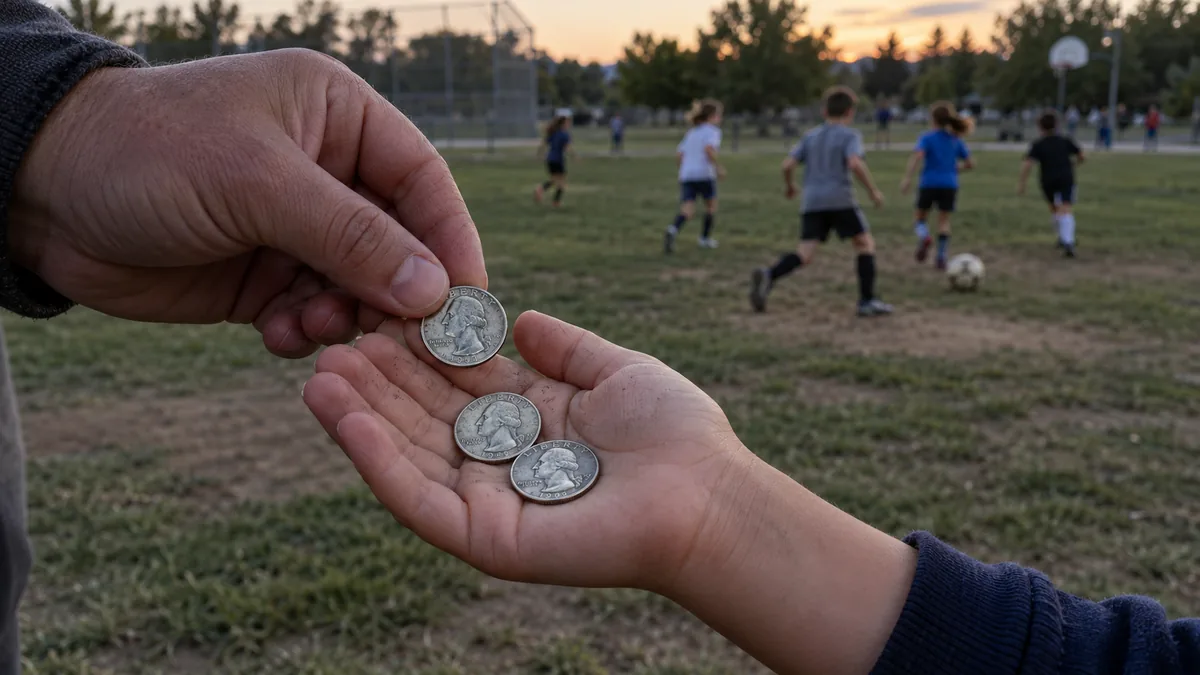
The most popular youth sports in the United States are soccer, basketball, and baseball or softball, according to an AP/Ipsos poll of sports parents taken in July 2026. Track and field, volleyball, swimming and cheer or dance come next. High school counts from the 2024 to 2025 school year put track, football and basketball on top.
Different surveys measure different things, so the rankings shift depending on who is counted and how. Below are three current sources, what each one says, and how the results line up with the 20 sports the U.S. Mint named on October 26, 2026, for the Youth Sports Quarters, five a year from 2027 to 2030 (Mint press release, October 26, 2026). The 2027 coins are covered on our 2027 quarters page.
Three sources on youth sports participation
AP/Ipsos Sports Parents Poll (August 2026)
Ipsos surveyed 1,737 U.S. adults for the Associated Press from July 21 to 26, 2026, including an oversample of 510 parents whose K to 12 child plays organized sports. Those parents were asked which sports their child plays or has played. Soccer led at 31%, followed by basketball at 25% and softball or baseball at 20%. Cheerleading or dance came in at 16%, and swimming or diving, track and field, and volleyball each at 14%. The same poll found that 54% of parents of school-aged children say at least one child plays an organized sport (AP/Ipsos Sports Parents Poll, August 2026).
Aspen Institute Project Play, State of Play 2025
Project Play's annual report combines federal and industry data. Using the National Survey of Children's Health, it estimates that 55.4% of kids ages 6 to 17, about 27.3 million, played organized sports in 2023 (Project Play participation rates). Using Sports & Fitness Industry Association (SFIA) data, it reports that 65% of kids ages 6 to 17 tried a sport at least once in 2024, up from 59% in 2021.
The sport trends are the interesting part. From 2019 to 2024, regular participation among kids 6 to 12 rose 14% in flag football but fell 19% in baseball, 7% in tackle football, 3% in soccer and 2% in basketball. Among 6 to 12 year olds in 2024, flag football (4%) was ahead of tackle football (2.7%). Regular participation among girls 6 to 17 reached 37%, the highest SFIA has tracked since at least 2012 (State of Play 2025: participation trends).
NFHS High School Athletics Participation Survey, 2024 to 2025
The National Federation of State High School Associations counts roster spots, not children, so a three sport athlete counts three times. Its 2024 to 2025 survey recorded a record 8,266,244 participants: 4,726,648 boys and 3,539,596 girls (NFHS 2024 to 2025 participation survey). For boys, 11 player football led with 1,029,588, then outdoor track and field (644,235) and basketball (540,704). For girls, outdoor track and field led with 513,808, then volleyball (492,799) and soccer (393,048).
Most popular youth sports: the numbers side by side
The table pairs the AP/Ipsos parent figures with NFHS high school totals (boys and girls combined) and shows the year, if any, that the sport appears on a Youth Sports Quarter. "n/a" means the source did not report that sport.
| Sport | Parents saying child plays (AP/Ipsos, 2026) | High school participants (NFHS, 2024 to 2025) | Quarter year |
|---|---|---|---|
| Soccer | 31% | 877,956 | 2027 |
| Basketball | 25% | 896,944 | 2029 |
| Baseball | 20% (with softball) | 472,598 (boys) | 2027 |
| Softball (fast pitch) | 20% (with baseball) | 338,445 | 2027 |
| Cheer or dance | 16% | 206,262 (girls, competitive spirit) | 2029 (cheerleading) |
| Track and field (outdoor) | 14% | 1,158,043 | 2028 |
| Volleyball | 14% | 588,771 | 2030 |
| Swimming and diving | 14% | 257,405 | 2028 (swimming) |
| Football (11 player) | n/a | 1,034,425 | 2028 (American football) |
| Cross country | n/a | 433,298 | None |
| Wrestling | n/a | 374,278 | 2029 |
| Tennis | n/a | 363,388 | 2029 |
| Golf | n/a | 247,742 | 2027 |
| Lacrosse | n/a | 212,988 | 2028 |
| Snowboarding | n/a | 796 | 2027 |
Two caveats. The AP/Ipsos percentages come from parents of kids who already play organized sports, so they describe what sports families choose, not the share of all children. The NFHS totals cover high school teams only, which is why sports that kids mostly do outside school, such as snowboarding, look tiny there. Six quarter sports are not in the table because none of the figures quoted here covers them: gymnastics, karate, figure skating, skiing, skateboarding and ice hockey.
Where girls' sports and flag football fit
Girls are a growing share of youth sports, and their top sports differ from boys'. In the NFHS count, volleyball is the second largest girls' high school sport and fast pitch softball is fifth. Girls' flag football had 68,847 high school players in 2024 to 2025 and girls' wrestling had 74,064 at 8,100 schools, according to the NFHS. Softball is the only 2027 quarter sport played mainly by girls. Volleyball, the second largest girls' high school sport, gets its quarter in 2030, and cheerleading gets one in 2029.
Flag football is the other trend to watch. It is the only team sport SFIA tracked that grew in regular participation among kids 6 to 17 from 2019 to 2024, per Project Play. It is not one of the 20 quarter sports; the Mint lists the 2028 sport as American football. Cost shapes all of these numbers, too: Project Play reports that the gap in regular participation between kids from households earning under $25,000 and those earning $100,000 or more widened from 13.6 percentage points in 2012 to 20.2 points in 2024.
Which popular sports made the quarter lineup
Every sport in the AP/Ipsos top group is on a quarter, though the poll grouped cheerleading with dance and swimming with diving. Soccer, baseball and softball come first, in 2027. Track and field and swimming follow in 2028, basketball and cheerleading in 2029, and volleyball in 2030. The NFHS leaders match too: the top three boys' sports (football, track and field, basketball) and the top three girls' sports (track and field, volleyball, soccer) all have a quarter. The three 2027 coins among them each have their own page: soccer quarter, baseball quarter and softball quarter.
Two of the 2027 picks do not come from the top of any participation list. Golf ranks eighth among boys' high school sports with 162,357 players and has 85,385 girls, a respectable total of 247,742. Snowboarding is the outlier: only 796 high school athletes (48 boys' and 42 girls' school programs) in five states. That is not a flaw in the program. The law does not ask for the most played sports. It asks the Treasury Secretary to choose "after appropriate outreach and consultation with the public," and a sport on a coin also has to make a good design. Our golf quarter and snowboarding quarter pages cover those two coins. The same pattern shows up later in the series. Cross country, with 433,298 high school participants, more than wrestling or tennis, has no quarter, while karate, for which these sources give no figure, gets one in 2029.
Survey list sports that made the cut, and those that did not
In early 2025 the Mint ran a public survey from January 22 to February 20, asking Americans to rate 58 sports from "Highly Appealing" to "Not At All Appealing." The Mint said it built the list with the President's Council on Sports, Fitness & Nutrition and the Office of Disease Prevention and Health Promotion (Mint press release, January 22, 2025). The results have never been published. Our page on how the sports were chosen covers the process in detail.
Not every sport on the list has been named in public reports. Of the survey sports that Coin World and Numismatic News named, here is how they came out when the Mint announced all 20 on October 26, 2026:
- On a quarter: soccer and golf (2027); track and field, American football, swimming, gymnastics and lacrosse (2028); basketball, wrestling and karate (2029); volleyball, ice hockey, figure skating, skiing and skateboarding (2030).
- Not on a quarter: flag football, pickleball, archery, dodgeball, fencing, kayaking, orienteering, racquetball, speed skating, synchronized swimming, taekwondo and water polo.
The rest of the lineup is baseball, softball and snowboarding (2027) and tennis and cheerleading (2029). Popularity mattered, but it was not the only test: basketball, the second most named sport in the parent poll, comes in 2029, and flag football, the fastest growing sport in the Project Play data, is not on the list at all.
What this means for young collectors
A natural first goal is the coin that matches a child's own sport. A soccer player will look for the soccer quarter in change before anything else, and that is a fine way to begin. Our earlier post on coin collecting for kids covers folders, magnifiers and how to search change. When the quarters reach circulation, ones found in pocket change are worth 25 cents; the fun is in finding all five each year. A basketball player has to wait for 2029.
Frequently asked questions
- What is the most popular youth sport in the United States?
- Soccer, by the AP/Ipsos Sports Parents Poll of July 2026: 31% of sports parents said their child plays or has played it. In high school roster counts for 2024 to 2025, outdoor track and field had the most participants.
- How many American kids play organized sports?
- About 55.4% of children ages 6 to 17, or roughly 27.3 million, played organized sports in 2023, according to National Survey of Children's Health data reported by the Aspen Institute's Project Play.
- Which youth sport is growing fastest?
- Flag football. Project Play's State of Play 2025 reports a 14% rise in regular participation among kids 6 to 12 from 2019 to 2024, while baseball fell 19% over the same period.
- Is basketball going to be on a quarter?
- Yes. On October 26, 2026, the U.S. Mint named basketball as one of the five 2029 Youth Sports Quarter sports. No design for it has been published yet.
- Why was snowboarding picked if few kids play it?
- The law does not require the most played sports. It asks the Secretary to choose after public outreach and consultation, and the survey results behind the choices were never published.
Sources
- AP/Ipsos Sports Parents Poll, August 2026 (fielded July 21 to 26, 2026)
- Aspen Institute Project Play, State of Play 2025: Participation Trends
- Aspen Institute Project Play: Youth sports facts, participation rates
- NFHS 2024 to 2025 High School Athletics Participation Survey (PDF)
- NFHS: Record participation numbers indicate importance of high school sports (August 22, 2025)
- U.S. Mint press release, January 22, 2025: An invitation to all Americans to celebrate youth sports
- Coin World: Mint seeks input on future youth sports quarter dollars
- Numismatic News: U.S. Mint Releases Survey for 2027 Quarter Program (January 29, 2025)
- Public Law 116-330 (H.R. 1923, enrolled), govinfo.gov
- U.S. Mint press release, October 26, 2026: new circulating coin program designs for 2027
Published 24 November 2026. Facts checked against the sources listed above. The 2027 designs are final, published by the U.S. Mint on 26 October 2026; later years' designs are not chosen yet.