Olympic Coins: Every U.S. Olympic Commemorative and the 2028 Question
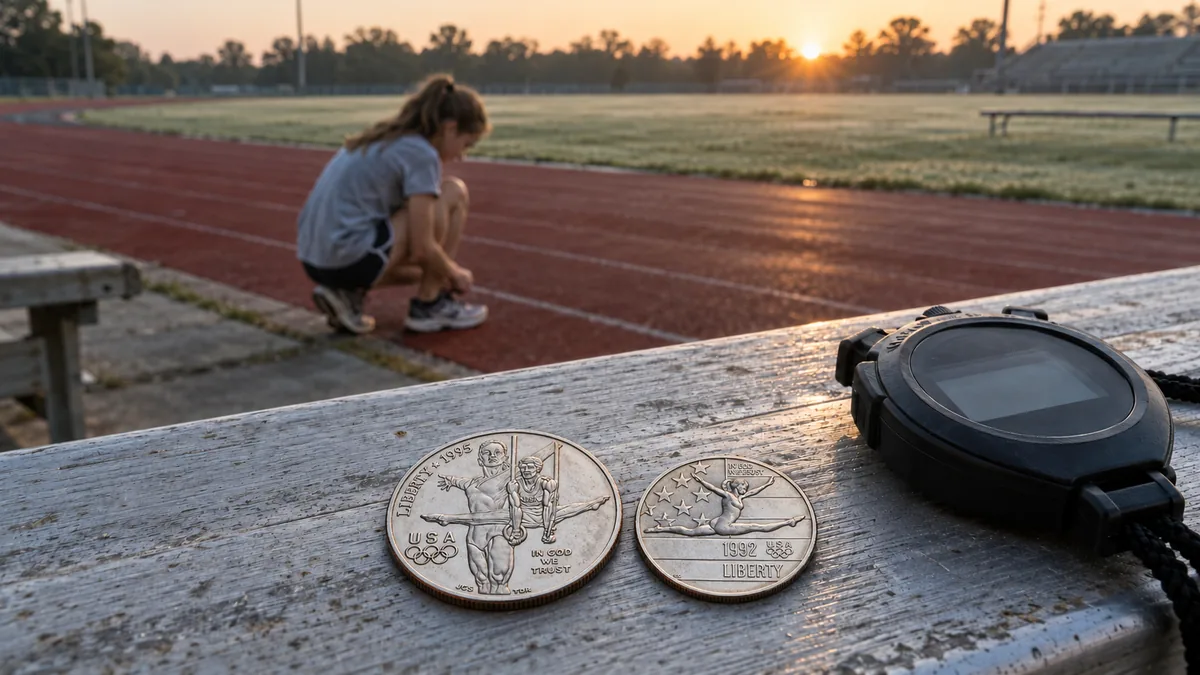
U.S. Olympic coins are commemorative coins Congress authorized for five Games: Los Angeles 1984, Seoul 1988, Albertville and Barcelona 1992, Atlanta 1996 and Salt Lake City 2002. The Mint issued them from 1983 to 2002 as half dollars, silver dollars and $5 and $10 gold pieces. No Olympic coin has been authorized for Los Angeles 2028.
The surcharges on these coins (an extra amount added to the sale price by law) went to the organizing committees and the U.S. Olympic Committee. The Mint says it made 27 Olympic related coins in this run: 24 for the Olympic Games, two for the Paralympics and one for the Special Olympics, under laws passed from 1982 to 2000 and signed by three presidents (U.S. Mint: Olympic commemorative coins).
U.S. Olympic coins by program
The table lists each program with its authorizing law and the total coins sold, taken from the Mint's historical sales pages. Sales are final figures for 1984, as of January 1990 for 1988, and as of March 2003 for 2002. The Atlanta figures the Mint published in 1997 were marked provisional, so we give the number of designs instead of a total.
| Games | Coin years | Coins issued | Law | Total coins sold |
|---|---|---|---|---|
| Los Angeles 1984 (Summer) | 1983, 1984 | 1983 silver dollar, 1984 silver dollar, 1984 $10 gold | Public Law 97-220 | 5,045,474 |
| Seoul 1988 (Summer) | 1988 | Silver dollar, $5 gold | Authorized October 28, 1987 | 1,895,112 |
| Albertville and Barcelona 1992 | 1992 | Clad half dollar, silver dollar, $5 gold | Public Law 101-406 | 1,478,354 |
| Atlanta 1996 (Summer) | 1995, 1996 | 16 designs: 4 half dollars, 8 silver dollars, 4 $5 gold | Public Law 102-390 | Provisional only |
| Salt Lake City 2002 (Winter) | 2002 | Silver dollar, $5 gold | Public Law 106-435 | 250,583 |
The trend is plain in the right column. Los Angeles sold more than five million coins. Salt Lake City, eighteen years later, sold about a quarter of a million.
Los Angeles 1983 to 1984: the program that started it
Public Law 97-220, signed by President Reagan on July 22, 1982, authorized three coins. The first, the 1983 Discus Thrower silver dollar, was released on December 15, 1982. Elizabeth Jones designed the obverse, a version of the Greek discus thrower with five stars and the Olympic rings, and John Mercanti designed the eagle bust on the reverse. The Mint calls it the first commemorative silver dollar in more than 80 years.
The 1984 silver dollar shows a sculpture proposed for the front of the Los Angeles Memorial Coliseum, with the stadium behind it. The third coin, the 1984 $10 gold piece, made two kinds of history. PCGS describes it as the first gold coinage struck in the United States since 1933, and its West Point pieces were the first U.S. coins to carry a W mint mark. Proofs were struck at four Mints (P, D, S and W).
Sales were large by modern standards. The Mint's figures show 2,219,596 of the 1983 dollar, 2,252,514 of the 1984 dollar and 573,364 of the gold coin (Mint sales figures for the 1983 to 1984 Olympic coins).
Seoul 1988 and Albertville and Barcelona 1992
For the Games abroad, the coins honored American athletes rather than a host city. The 1988 silver dollar, designed by Patricia Lewis Verani (obverse) and Sherl Joseph Winter (reverse), shows two torches on one side and the Olympic rings in a wreath on the other. Elizabeth Jones and Marcel Jovine designed the $5 gold half eagle. The Mint sold 1,550,734 silver dollars and 344,378 gold coins.
The 1992 program covered both the Albertville Winter Games and the Barcelona Summer Games with three coins:
- Clad half dollar: a gymnast in motion with the Olympic rings and stars, by William C. Cousins; reverse of an olive branch across a torch, by Steven Bieda. Struck at Philadelphia (uncirculated) and San Francisco (proof).
- Silver dollar: a baseball pitcher in a windup by John R. Deecken, the winner of an open design competition. Collectors noticed a resemblance to a Nolan Ryan baseball card; Deecken said the figure was a composite.
- $5 gold: a sprinter in front of a vertical American flag, struck at West Point.
The pitcher dollar is one reason the 1992 set turns up in baseball collections. See our earlier post on baseball coins for the full list of baseball designs.
Atlanta 1995 to 1996, including the Paralympic coins
Atlanta was the biggest Olympic coin program the Mint ever ran: 16 designs, half released in 1995 and half in 1996, each in proof and uncirculated finishes. Public Law 102-390 split the surcharges between the Atlanta Committee for the Olympic Games and the U.S. Olympic Committee.
The 16 Atlanta designs
- Clad half dollars: basketball and baseball (1995); swimming and soccer (1996).
- Silver dollars: gymnastics, cycling, track and a Paralympic blind runner (1995); tennis, rowing, high jump and a Paralympic wheelchair athlete (1996).
- $5 gold: torch runner and stadium (1995); cauldron and flag bearer (1996).
The two Paralympic dollars
The Mint describes both as honoring the Paralympics and Paralympic athletes. The 1995 dollar shows a blind runner tethered to a guide, the Paralympic mark and the word "spirit" in Braille; Jim Sharpe designed the obverse and William Krawczewicz the reverse. The 1996 dollar shows a wheelchair racer on a track, again with "spirit" in Braille, with an obverse by Jim Sharpe and a reverse by Thomas D. Rogers Sr. carrying the Atlanta Committee mark. Both were struck at Philadelphia (Mint page for the 1996 Paralympic silver dollar).
Atlanta sold poorly. In an August 1, 1997 release, the Mint said sales were "the lowest or among the lowest of all modern commemoratives." Its provisional count for the 1996 wheelchair athlete dollar was 84,808 proofs and 14,513 uncirculated; the 1996 flag bearer $5 gold had just 9,180 uncirculated pieces (Mint release on Atlanta Olympic coin sales).
The 1996 soccer half dollar is an early example of the sport on U.S. money; the 2026 FIFA program is covered in our World Cup coins post. For the wider pattern of sports on U.S. money, see sports on coins.
Salt Lake City 2002: the last U.S. Olympic coins
Public Law 106-435 authorized up to 80,000 $5 gold coins and 400,000 silver dollars for the XIX Olympic Winter Games. The silver dollar, struck at Philadelphia, carries the Games' crystal emblem and the Olympic rings on the obverse (Donna Weaver) and the Salt Lake City skyline with the Rocky Mountains on the reverse (John Mercanti). The gold coin, struck at West Point and designed by Donna Weaver, pairs the crystal emblem with an Olympic flame rising from a cauldron.
Final sales were 207,121 silver dollars and 43,462 gold coins, well under the limits. No U.S. Olympic coin has been issued since.
2028 Olympic coins: what the law actually says
Public Law 116-330, the Circulating Collectible Coin Redesign Act of 2020, is the same law behind the 2027 Youth Sports Quarters. It mentions the 2028 Games, but for medals, not coins. The text says the Secretary of the Treasury "is authorized to design and manufacture medals for award at the 2028 Olympic Games in Los Angeles, California," may use Treasury gold and silver stock to make them, and may provide them to the United States Olympic & Paralympic Committee (Public Law 116-330, enrolled text). Nothing in that section creates a 2028 commemorative coin.
Separate coin bills exist. S. 2265 and its House companion, both titled the America's Olympic and Paralympic Games Commemorative Coins Act and introduced on July 14, 2025, would authorize up to 100,000 $5 gold coins, 500,000 silver dollars, 300,000 clad half dollars and 100,000 proof silver dollars for Los Angeles 2028, plus a matching program for Salt Lake City 2034 (S. 2265 bill text). A bill is not a law. As of late October 2026 we found no record of either bill passing, so there is no authorized 2028 Olympic coin today.
One overlap is easy to spot. On October 26, 2026, the Mint named the five 2028 Youth Sports Quarter sports, and swimming, gymnastics, track and field and lacrosse are all on the LA 2028 Olympic program, where flag football, a form of American football, also makes its debut. The Mint has not linked the quarters to the Games.
The Paralympic half dollar from 2027
The closest thing to a new Olympic coin is a circulating one. The same law says that from January 1, 2027, the half dollar reverse will honor "a sport tailored to athletes with a range of disabilities," one Paralympic sport per coin, chosen by the Secretary after consultation with U.S. Paralympics. The obverse keeps John F. Kennedy in a new portrait.
The 2027 sport is wheelchair basketball. The two review panels recommended different reverses, and on October 26, 2026, the Mint published the final design: the coin is design 50c-WCBB-01, the CCAC's pick (the CFA had preferred its #7), and it shows an adult Paralympic athlete. The new Kennedy portrait matches candidate JFK-04, the CFA's pick, and replaces the Gilroy Roberts portrait used since 1964. The later half dollars will feature para climbing (2028), para ice hockey (2029) and para snowboarding (2030). Our 2027 Kennedy half dollar page shows both sides, and the new Kennedy half dollar post covers the portrait. Unlike the 1995 and 1996 Paralympic dollars, these coins are meant for circulation, so any you find in change are worth face value.
Frequently asked questions
- What was the first U.S. Olympic coin?
- The 1983 Discus Thrower silver dollar, released on December 15, 1982, for the 1984 Los Angeles Games. It was authorized by Public Law 97-220 with a 1984 silver dollar and a 1984 $10 gold coin.
- How many Olympic coins has the U.S. Mint made?
- The Mint counts 27 coins from 1983 to 2002: 24 for the Olympic Games, two for the Paralympics and one for the Special Olympics.
- Will there be 2028 Olympic coins?
- Not unless Congress passes a new law. Public Law 116-330 authorizes medals for award at the 2028 Los Angeles Games, not coins, and the coin bills introduced in July 2025 had not passed as of late October 2026.
- Which U.S. coins honor the Paralympics?
- The 1995 blind runner and 1996 wheelchair athlete silver dollars from the Atlanta program, and from 2027 the circulating half dollar, which features one Paralympic sport a year: wheelchair basketball, then para climbing, para ice hockey and para snowboarding.
- Are old U.S. Olympic coins worth more than face value?
- The silver and gold pieces contain precious metal, so they are worth more than face value, but prices vary by coin and grade. Check a dated price guide or recent auction records before buying or selling.
Sources
- U.S. Mint: Olympic Commemorative Coins (Inside the Mint, January 29, 2018)
- U.S. Mint: Historical sales, 1983 to 1984 U.S. Olympic Coins (Los Angeles)
- U.S. Mint: Historical sales, 1992 U.S. Olympic Coins (France and Spain)
- U.S. Mint: Historical sales, 2002 Olympic Winter Games
- U.S. Mint press release, August 1, 1997: Olympic sales figures
- U.S. Mint: Centennial Olympics (Paralympics) Silver Dollar, 1996
- PCGS: The 1983 to 1984 Olympic Commemorative Coins
- Public Law 116-330 (H.R. 1923, enrolled), govinfo.gov
- S. 2265, America's Olympic and Paralympic Games Commemorative Coins Act (introduced July 14, 2025)
- U.S. Mint press release, October 26, 2026: new circulating coin program designs for 2027
Published 21 November 2026. Facts checked against the sources listed above. The 2027 designs are final, published by the U.S. Mint on 26 October 2026; later years' designs are not chosen yet.