Coin Collecting for Kids: Start With the Youth Sports Quarters
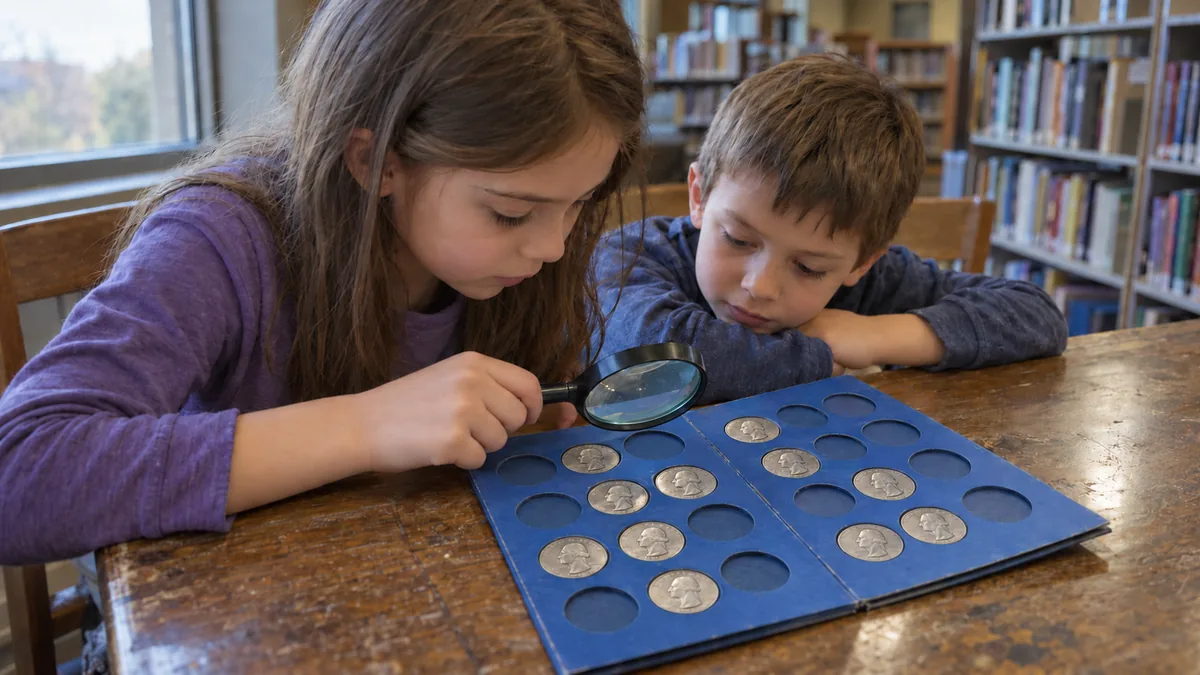
Coin collecting for kids works best when it starts with coins they can actually find. The Youth Sports Quarters, five new designs a year from 2027 to 2030, are a natural first set: each costs 25 cents, each shows a sport a child may play, and the hunt happens in everyday change. All you need is a folder, a magnifier and a plan.
Updated 4 November 2026: this guide now covers coin collecting by age, the best books for young collectors, local coin clubs and more free U.S. Mint activities. The U.S. Mint published the final 2027 designs and named all 20 sports on 26 October 2026, and the notes below reflect that.
Below is a practical plan for parents and grandparents: what to buy, where to look, how much to spend, how to handle coins, and the free resources from the U.S. Mint and the American Numismatic Association (ANA).
Is coin collecting a good hobby for kids?
Yes, and for reasons that have little to do with money. A child sorting a handful of change is reading dates, comparing numbers, spotting small differences and asking who the people on the coins are. That is reading, math and history practice that does not feel like homework.
- It is cheap. Coins from change cost face value, and a searched bank roll goes back to the bank.
- It builds patience. The coin you want does not turn up every day, so finding it feels earned.
- It works at any level. A four year old can sort cents from dimes; a twelve year old can learn mint marks and grading.
- It is shareable. Grandparents often have old coins and stories to go with them, which makes it a family hobby.
The one thing to avoid is treating it as an investment. Coins found in change are worth face value, and a child who expects every coin to be rare will be disappointed. Collect for the hunt and the set.
Why the Youth Sports Quarters make a good first set
Beginners do best with a set that has a clear finish line. The Youth Sports Quarters give a child a short, defined goal each year: five quarters for 2027 (baseball, golf, soccer, softball and snowboarding), with five more sports each year through 2030. The Mint announced the final 2027 designs on October 26, 2026, and named all 20 sports (see our full list). Our 2027 quarters page shows what each finished design looks like.
- Cheap. A circulated quarter is worth 25 cents. Collecting the whole year from change costs face value.
- Findable. These are circulating coins, so they will turn up at stores, in vending machine change and in bank rolls.
- Personal. A child who plays soccer will want the soccer quarter first. That is a better hook than any price guide.
One timing note for late 2026: the 2027 quarters are not out yet. The Mint had not announced release dates as of early November 2026 (we track them on our release dates page). That gives you a few months to set up and practice on the 2026 Semiquincentennial quarters and older designs already in your change jar. Our post on 2027 coins covers everything else new next year.
Coin collecting for kids by age
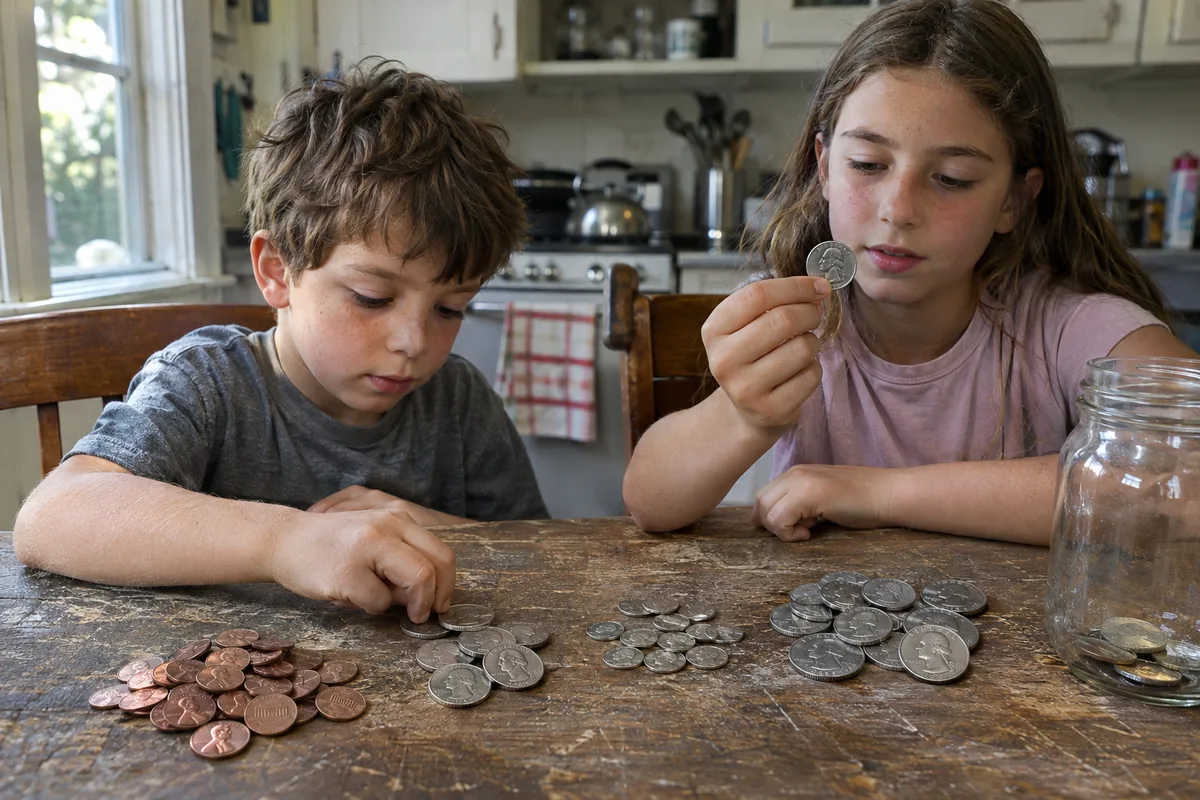
The same hobby looks different at four, eight and twelve. Match the goal to the child, and let them move up when they are ready.
| Age | Good starting goal | What the adult does |
|---|---|---|
| 3 to 5 | Sort a jar of change into cents, nickels, dimes and quarters; name the coins | Supervises closely, since coins are a choking hazard for small children |
| 6 to 8 | Find one quarter of each design from change; read dates aloud | Keeps the folder, helps with the magnifier, sets a weekly search time |
| 9 to 12 | Collect each Youth Sports Quarter from both Philadelphia and Denver; keep a notebook | Takes the child to the bank for rolls, helps look up mint marks |
| 13 and up | Learn basic grading, add proof coins, join a club or the ANA | Sets the budget and lets the teen lead |
The U.S. Mint's own Quarter Quest activity is a good bridge between the younger and older stages. A child collects "a quarter for each year you've been alive," starting with the year they were born, then answers questions about the finished set. The Mint pitches the basic activity at kindergarten and the extra questions at second grade and up.
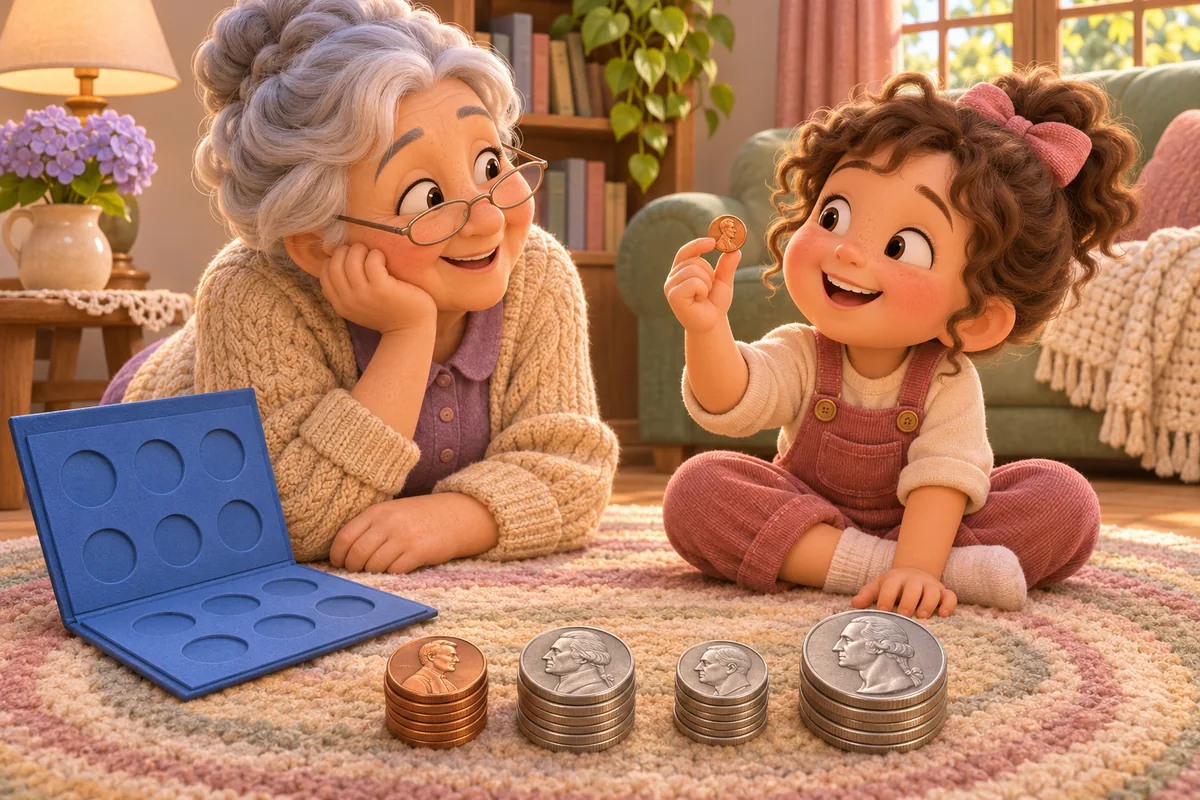
What to buy: the starter kit
The U.S. Mint's kids page on getting started collecting coins lists a short set of supplies, and it matches what experienced collectors use:
| Item | What it is for | Tip |
|---|---|---|
| Coin folder or album | Holds one coin per labeled hole so a child sees progress | Start with our free printable checklist until a folder for the series is available |
| Magnifying glass | Reading dates, mint marks and small design details | A simple handheld magnifier is plenty for a beginner |
| Cotton gloves | Keeps skin oils off coin surfaces | Optional for circulated quarters; good habit for proof coins |
| Soft towel or pad | Somewhere safe to work in case a coin slips | A folded dish towel works |
| Notebook | Listing each coin's type, year and where it was found | Let the child write the entries |
Skip anything sold as an investment. A beginner does not need graded coins, silver bullion or a costly display case. Print our free Youth Sports Quarters checklist and tape it to the fridge; checking a box when a new quarter turns up is half the fun, and it costs nothing.
Where kids can find coins
Searching change
The Mint's kids page suggests starting at home: "Look around your house, check your pockets and your piggy bank," along with couch cushions and the car. Once the 2027 quarters are released, make it a household rule that every quarter gets a look before it gets spent. Keep a small jar by the door for change from errands.
Bank rolls
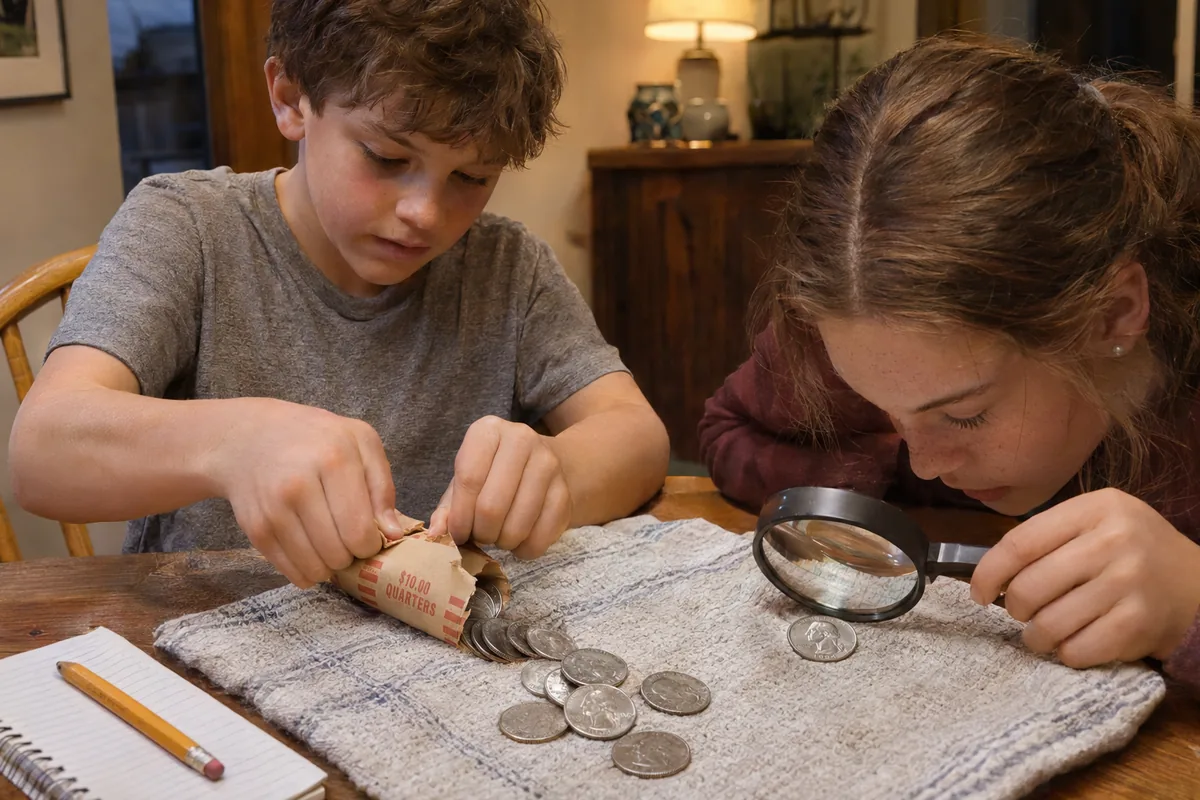
A standard roll of quarters holds 40 coins, or $10. Ask your bank or credit union teller for a few rolls, search them at the kitchen table, keep the keepers, and take the rest back. You spend nothing except time, and a child can check 40 coins in one sitting. Two courtesy rules: ask the bank whether it is willing to swap rolls for you, and rewrap or return the searched coins the way they want them.
Mint products
Some coins never show up in change. Proof coins with the San Francisco "S" mint mark come only in Mint products such as the 2027 Proof Set, covered in our 2027 proof set post. They are a nice goal later, not a starting point.
What kids should look at on each coin
Teaching a few words early makes the search more fun, because a child can explain what they found. The Mint's kids glossary defines the basics:
- Obverse: "the front (or 'heads') side of a coin. It usually has the date, mint mark, and main design." On the Youth Sports Quarters, that is a new portrait of George Washington in civilian clothes.
- Reverse: "the back (or 'tails') side of a coin." This is where the sport appears.
- Mint mark: "a small letter on a coin identifying which mint struck the coin." Finding it is a good first job for the magnifier.
- Uncirculated: "a coin in new condition that doesn't have any signs of wear."
Ask the child to record the year and mint mark of every keeper in the notebook. Over time they will start to notice wear, small differences and which mints show up most often where you live.
A budget for coin collecting for kids
- Coins from change: face value, 25 cents per quarter. Five 2027 quarters cost $1.25.
- Bank rolls: $10 per roll up front, fully returned when you trade back the coins you do not keep.
- Supplies: a folder, a magnifier and gloves are inexpensive at hobby shops and coin dealers.
- Optional extras: a Mint proof set (the 2027 set is listed at approximately $107), a picture book, or a youth ANA membership.
Set a simple rule before you start, such as "we only collect from change this year," so the hobby stays about the search rather than spending.
Handling and storage basics
The Mint's page on caring for your coin collection gives the rules every child should learn early:
- Hold coins by the edges. The Mint says to hold a coin "by its edges between your thumb and forefinger over a soft towel or surface."
- Never clean or polish. "Polishing and/or cleaning coins can reduce their value," and brushing or rubbing "can scratch a coin's delicate surface."
- Avoid PVC plastic. Use "acid-free cardboard and plastic holders free from polyvinyl chloride (PVC)," because PVC "eventually coats a coin with sticky green slime."
- Keep conditions steady. Store the folder in a closet or drawer, not a garage or an attic.
Teach these as habits, not punishments. A circulated quarter that gets dropped is still worth 25 cents.
Free learning resources
U.S. Mint for Kids
The Mint's kids site, kids.usmint.gov, which the Mint calls its Coin Classroom, has games, videos, coloring pages, coin activities such as Quarter Quest, and lesson plans sorted by grade. It also has a page of materials for scouts working on coin badges, with a free coin coloring book and a Coins For You booklet to download and print.
ANA Young Numismatists
The ANA runs a Young Numismatists program for grades K to 12. It lists monthly YN auctions where members bid with YN Dollars earned through projects, a Summer Seminar with scholarships for eligible participants, a Scouts merit badge starter kit, and two $1,000 college scholarships a year. A paid youth membership is listed at $16 a year for Gold (digital) and $26 a year for Platinum (printed magazine) for new K to 12 members.
Local coin clubs
A coin club gives a child other collectors to talk to, and many clubs welcome young members. The ANA keeps a club directory that searches by location and collecting interest; it counts more than 300 member clubs. Call ahead and ask whether a meeting suits kids before you go.
Best coin collecting books for kids
A good book gives a child something to read between searches. Two worth knowing:
- Kids Love Coins! by Charles Ghigna ("Father Goose") with Andi Martin, illustrated by Jacqueline East (Whitman, 2025). A 32-page hardcover picture book in rhyming verse for ages 3 and up, covering cents to half dollars, what coins are made of and the parts of a coin. List price $14.95.
- The Official Red Book: A Guide Book of United States Coins. The standard U.S. coin guide since 1946; the 2027 edition, the 80th, came out in summer 2026. It is a reference for older kids and teens who want to look up dates, mintages and values.
Whitman also makes inexpensive coin folders for younger kids, including its Search and Save line, which work well beside a picture book.
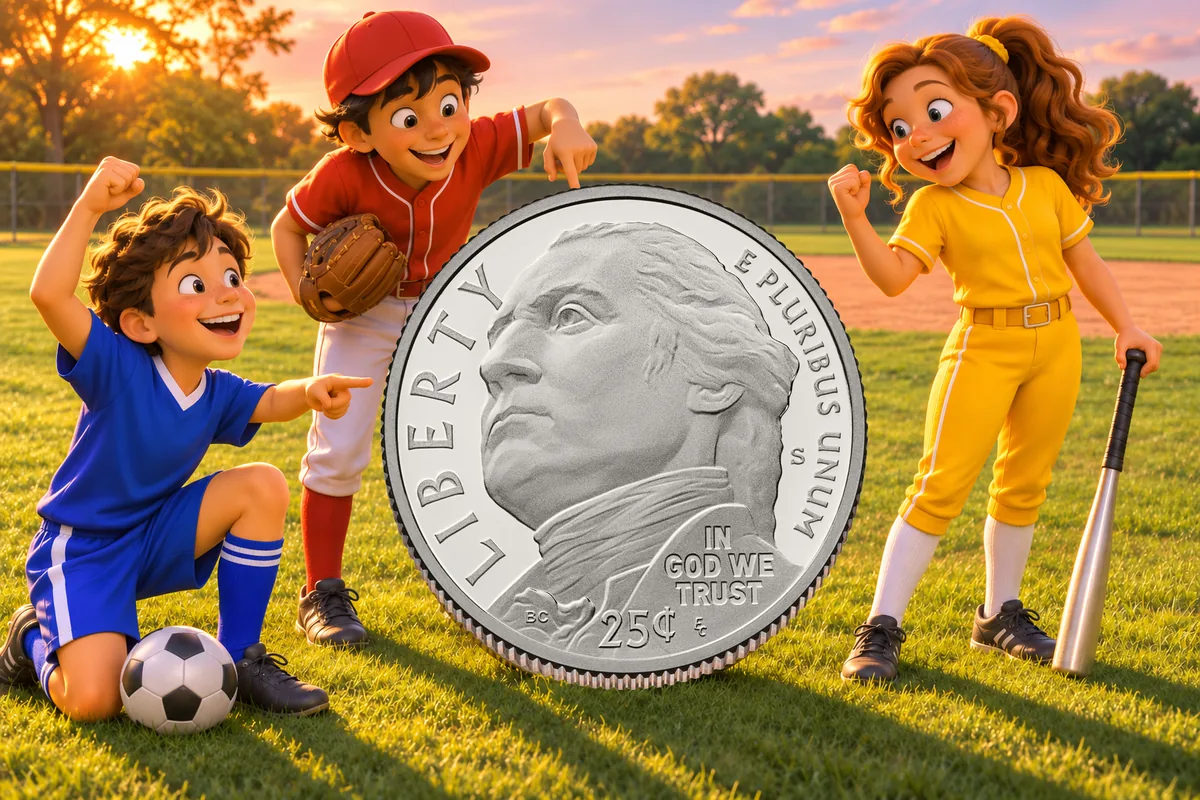
Make it a game tied to the sports they play
Kids stay with a hobby that connects to the rest of their life. A few ideas that work:
- Start with their sport. A Little League player hunts the baseball quarter first; a soccer player goes after the soccer quarter. A swimmer or lacrosse player waits for 2028.
- Team challenge. Each family member picks a sport and races to find it. Winner picks the pizza toppings.
- Roll night. Search a bank roll together once a month and keep a running tally of what turned up.
- Learn the sport behind the coin. When a child finds a new quarter, read one fact about that sport together.
- Find the details. Use the magnifier to spot the date, the mint mark and the smallest part of the design.
Keep sessions short. Ten minutes of searching after dinner beats an hour that turns into a chore.
Frequently asked questions
- Is coin collecting a good hobby for kids?
- Yes. It practices reading, math and history, it costs face value when coins come from change, and it works at any level, from sorting cents to learning mint marks.
- What age is good for coin collecting for kids?
- Kids who can read dates and handle small objects safely can start. The ANA's Young Numismatists program covers grades K to 12, and the U.S. Mint's kids site sorts activities by grade.
- How much does it cost to start coin collecting?
- Very little. Quarters found in change cost face value, bank rolls can be searched and returned, and a folder, magnifier and gloves are inexpensive.
- What are good coin collecting books for kids?
- Kids Love Coins!, a rhyming picture book from Whitman for ages 3 and up, suits young children. Older kids and teens can use the Red Book, the standard guide to U.S. coins.
- Should kids clean old coins?
- No. The U.S. Mint warns that polishing or cleaning can reduce a coin's value and that brushing or rubbing can scratch it.
- When can kids start finding the Youth Sports Quarters?
- The program begins in 2027, but the Mint had not announced release dates as of early November 2026. Until then, practice on quarters already in circulation.
Sources
- U.S. Mint for Kids: Get started collecting coins
- U.S. Mint for Kids: Coin glossary
- U.S. Mint for Kids: Quarter Quest
- U.S. Mint for Kids: Coin scout badges
- U.S. Mint: Caring for your coin collection
- American Numismatic Association: Young Numismatists (Grades K-12)
- American Numismatic Association: Youth membership offer
- American Numismatic Association: Coin clubs
- CoinNews: Kids Love Coins! Arrives Ahead of U.S. 250th Anniversary (14 July 2025)
- CoinNews: Whitman to Release 80th Edition of Red Book in June 2026
Published 31 October 2026 · Updated . Facts checked against the sources listed above. The 2027 designs are final, published by the U.S. Mint on 26 October 2026; later years' designs are not chosen yet.