Coin Collectors: What They Collect, What Makes Coins Valuable and Where to Find Them
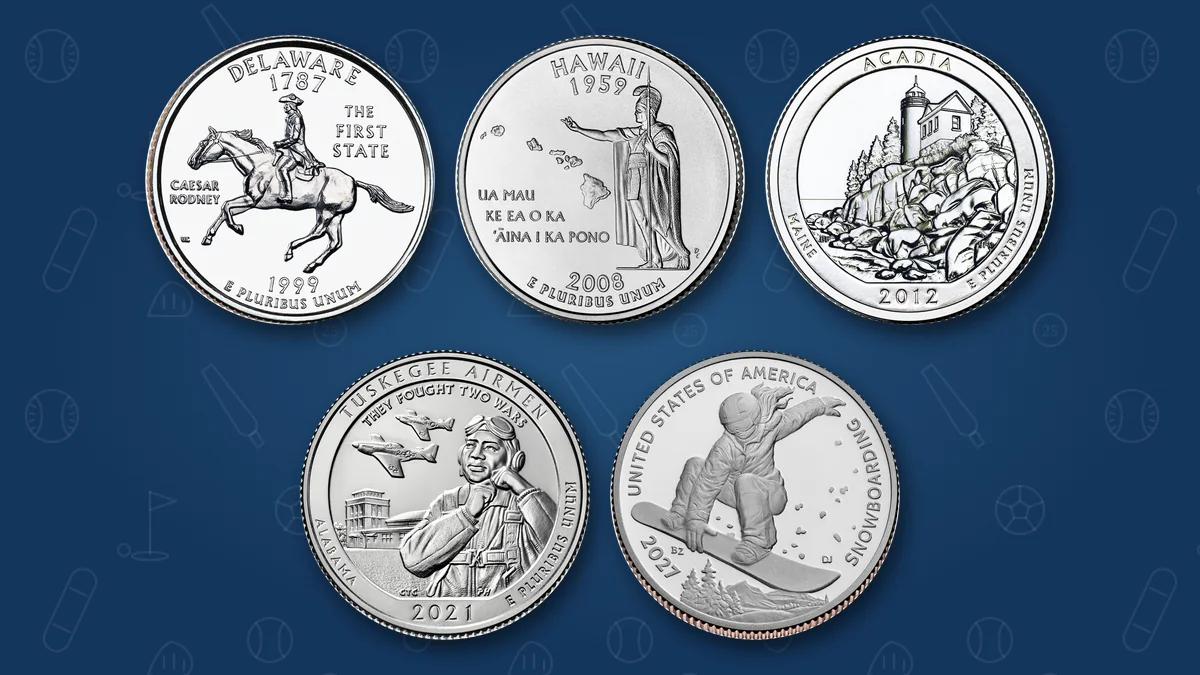
Coin collectors are people who save coins for their history, design, rarity or metal, from a child filling a quarter folder to a specialist hunting one rare date. The formal name for a coin collector is numismatist. Nobody keeps an exact count, but estimates of active U.S. collectors run from about 250,000 to 500,000, with millions more who save coins casually.
What are coin collectors called?
A coin collector is called a numismatist. Merriam-Webster defines a numismatist as "a specialist in numismatics" and, in its second sense, "a collector of numismatic objects: a coin collector." Numismatics is the study and collecting of coins, tokens, medals and paper money, so a numismatist may focus on any of them.
Most people in the hobby just say collector. The longer word turns up in club names, in journals and in the title of the American Numismatic Association's monthly magazine, The Numismatist.
How many coin collectors are there in the United States?
There is no official count, and the answer depends on who you include. In a November 2024 post on the American Numismatic Association blog, Dennis Tucker estimated about 250,000 active collectors, and Steve Roach put the number at about 500,000 people who actively seek to learn about coins, based on proof set sales.
| Estimate | Who said it | What it counts |
|---|---|---|
| More than 125 million adults | U.S. Mint officials, 2001 | People saving the 50 State Quarters at the height of that program |
| About 500,000 | Steve Roach, ANA blog, 2024 | People who actively seek to learn about coins |
| 350,000 to 450,000 a year | Steve Roach, ANA blog, 2024 | U.S. proof set sales over the past decade |
| About 250,000 | Dennis Tucker, ANA blog, 2024 | Active coin collectors |
The gap is about definitions. The 2001 figure counts anyone who pulled state quarters from change; the smaller numbers count people who buy proof sets, read about coins and go to shows. That proof set demand matters for new coins: the U.S. Mint lists its 2027 Proof Set, the first set with the Youth Sports Quarters, with a product limit of 480,000. Our post on the 2027 proof set has the details.
What do coin collectors collect?
Most coin collectors pick a goal with a clear finish line, then work toward it. Common ways to build a collection:
- By series. One of each design in a program, such as the 50 State Quarters, the America the Beautiful quarters or the 20 Youth Sports Quarters that start in 2027.
- By date and mint mark. Every year from Philadelphia (P), Denver (D), San Francisco (S) and sometimes West Point (W).
- By type. One example of each major design of a denomination, such as every quarter design since 1796.
- By theme. Animals, presidents, ships or sports; our post on sports on coins covers that last one, and the baseball coin post goes deep on a single sport.
- By metal. Silver and gold coins, where the metal sets a floor under the price.
- Errors and varieties. Coins struck wrong at the Mint, such as doubled dies and off-center strikes.
Plenty of collectors mix these. A family might fill a state quarter map from change while one member saves only proof coins.
What makes a coin valuable to collectors?
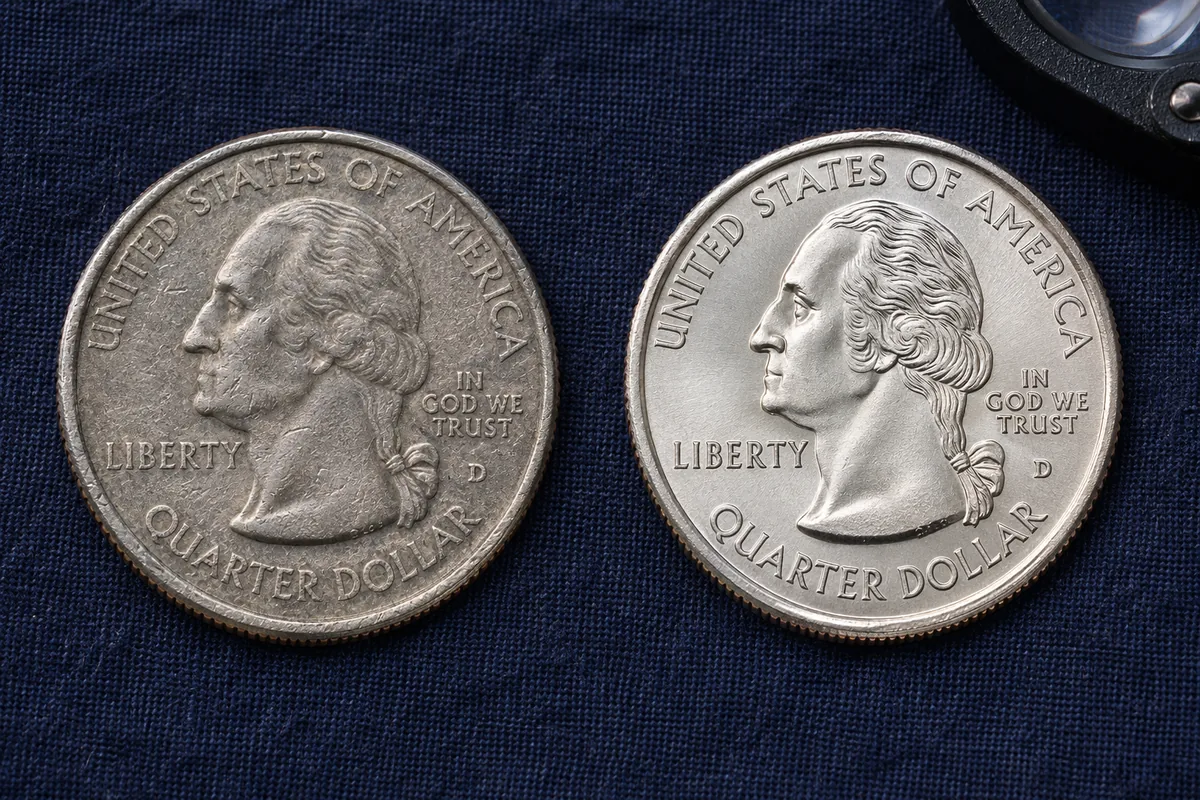
Rarity, condition and demand do most of the work, and metal content, history and plain emotion do the rest. CoinWeek's beginner's guide to coin value, published 30 September 2026, lists those six factors.
| Factor | What it means | Example |
|---|---|---|
| Rarity | Few were made, or few survive | The 2019 West Point "W" quarters, 2 million of each design, mixed into ordinary change |
| Condition | How close the coin is to new, graded 1 to 70 on the Sheldon scale | A 70 is a perfect coin; circulated coins grade far lower |
| Demand | How many collectors want it | Popular series sell well even when common |
| Metal | Gold or silver content | A silver proof quarter is worth at least its silver |
| History | Ties to a famous event or person | Commemoratives for major anniversaries |
| Emotion | What a bidder is willing to pay on the day | Auction results that beat price guides |
One plain fact for new collectors: a circulated modern quarter is worth 25 cents. The value in a set pulled from change is the hunt and the finished set, not resale. That is also why collecting is a good hobby for children; our guide to coin collecting for kids starts there.
Coin collectors near me: clubs, shows and shops
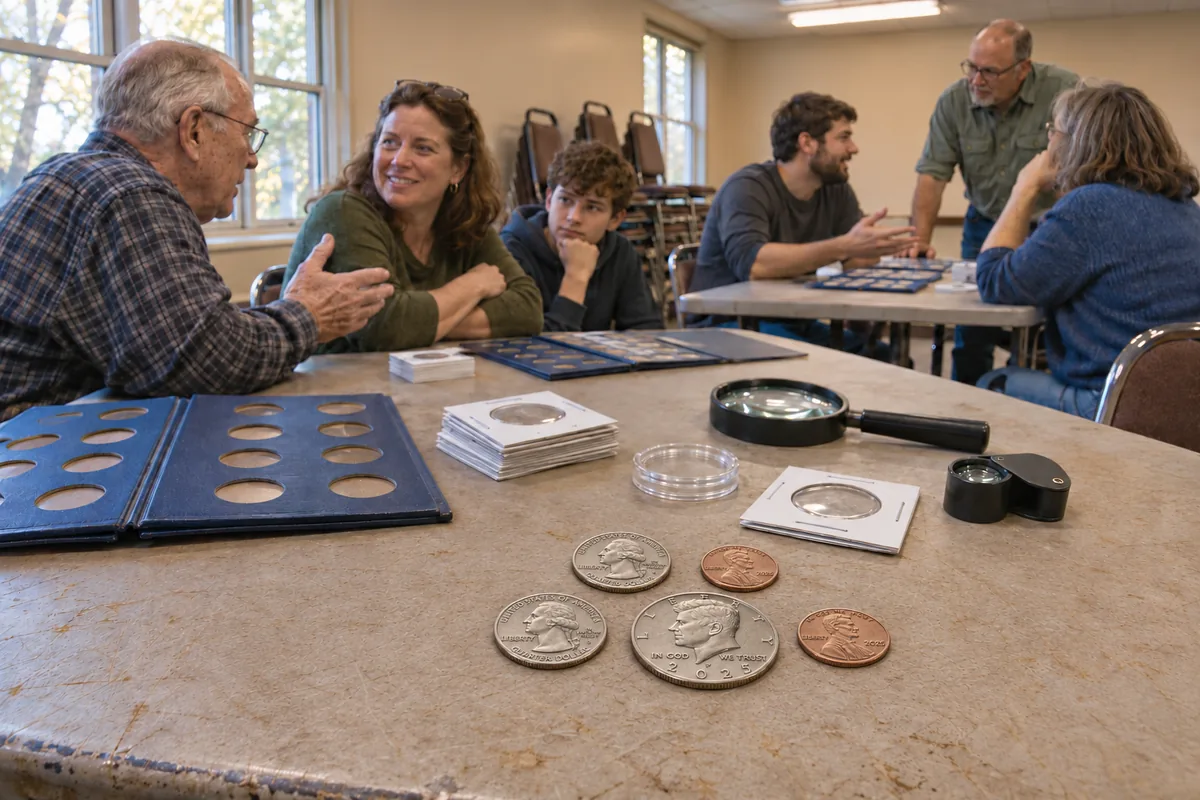
The fastest way to meet coin collectors near you is a local coin club or a coin show. The American Numismatic Association keeps a coin club directory that searches by location and collecting interest, and it counts more than 300 member clubs in the United States and other countries.
The ANA itself was founded in 1891, received a federal charter from Congress in 1912 and is based in Colorado Springs, where its Money Museum holds more than 250,000 objects. It runs two national shows a year, and the ANA's convention schedule lists these for 2027:
| Show | Dates | Place |
|---|---|---|
| National Money Show | 4 to 6 March 2027 | Virginia Beach Convention Center, Virginia Beach, Virginia |
| World's Fair of Money | 10 to 14 August 2027 | Donald E. Stephens Convention Center, Rosemont, Illinois |
Smaller shows run most weekends somewhere in the country, often hosted by local clubs. Coin shops are the other meeting place; dealers buy and sell and often know when the next local show is. If you are selling, get more than one offer.
Several groups use official-sounding names. The long-standing national nonprofit is the ANA, chartered by Congress; check any organization's history before you sell coins through it.
Coin holders for collectors
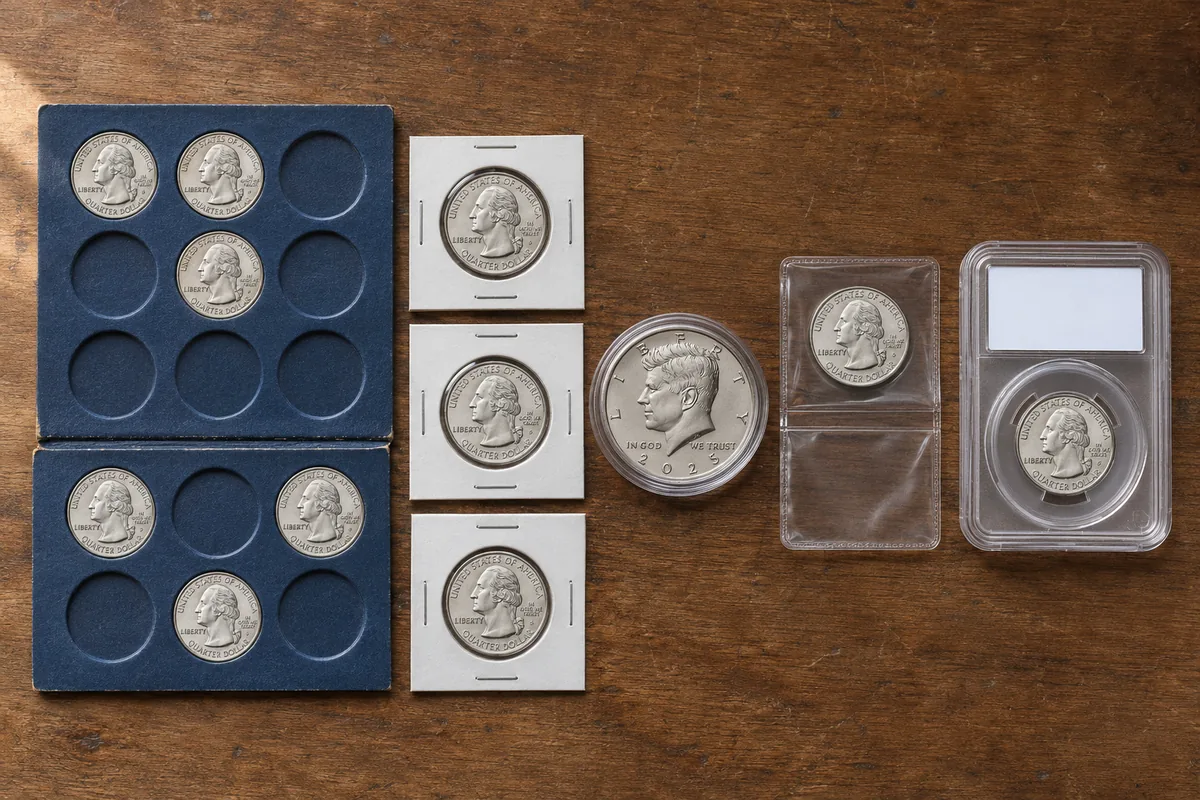
The right holder depends on the coin. The U.S. Mint's page on caring for your coin collection recommends acid-free cardboard and plastic holders free from polyvinyl chloride (PVC), because PVC eventually leaves a sticky green residue on coins.
| Holder | Best for | Watch for |
|---|---|---|
| Cardboard folder | A series collected from change | Coins stay exposed on one side |
| Album with slides | Displaying a full set | Slides can rub high points |
| Cardboard 2x2 holder | Single coins you want to label | Staples can scratch nearby coins |
| Hard plastic capsule | Proof and uncirculated coins | Pick the exact size for the coin |
| Graded holder (slab) | Valuable coins certified by a grading service | Grading costs more than a modern coin is worth |
Where coin collectors buy coins
New coins come from two places: change and the U.S. Mint. Circulating quarters reach banks through the Federal Reserve, so a roll from a teller costs face value. Collector versions, such as proof sets, uncirculated sets and rolls of new designs, are sold directly by the Mint at usmint.gov.
Older coins come from the secondary market:
- Coin shops and show dealers, where you can see a coin before you pay and ask questions.
- Auctions, which set many of the realized prices that price guides follow.
- Other collectors, through club trading nights and swaps.
For anything costly, buy coins certified by a major grading service, check recent realized prices rather than asking prices, and be wary of any ordinary modern quarter listed online as rare.
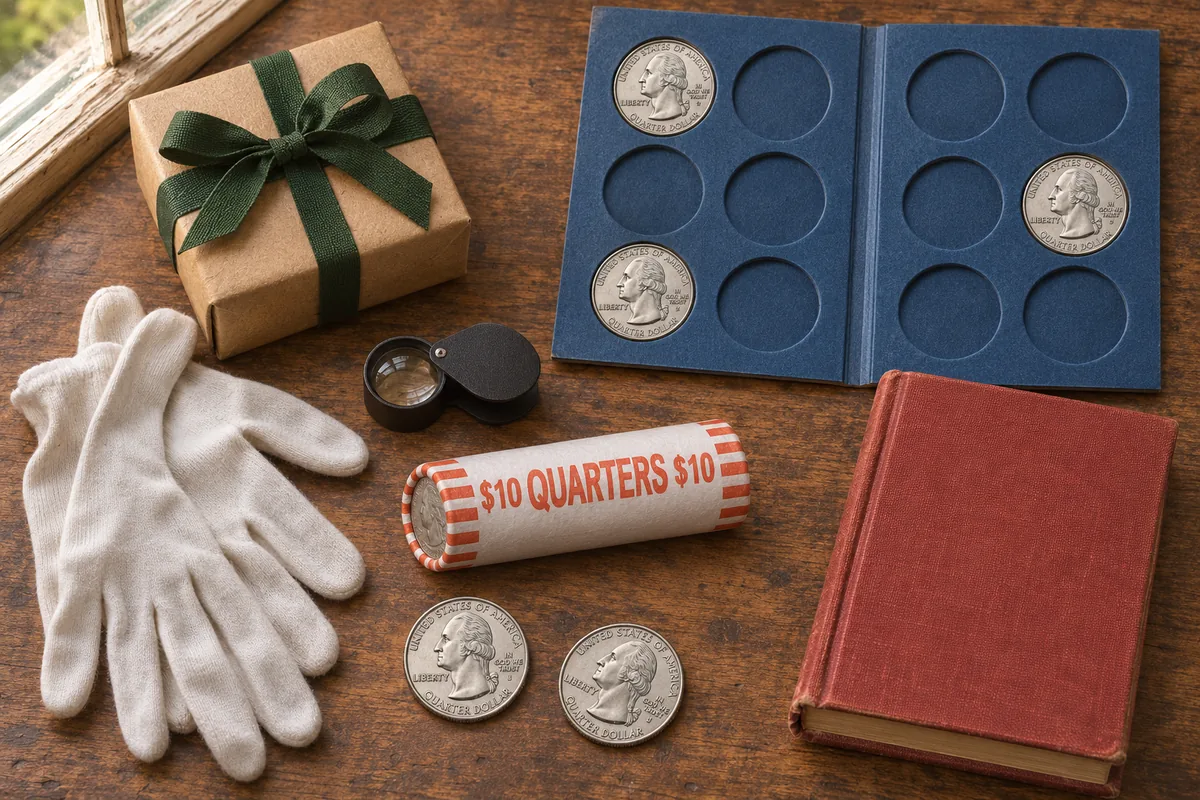
Gifts for coin collectors
The safest gifts are things every collector uses, or coins straight from the U.S. Mint.
- A Mint proof set. The 2027 Proof Set is listed at about $107 and ships in 2027.
- A folder for a current series, with our free Youth Sports Quarters checklist for the coins starting in 2027.
- A good magnifier or 10x loupe and a pair of cotton gloves.
- The Red Book. The 80th edition, the 2027 Guide Book of United States Coins, came out in summer 2026.
- A few bank rolls of quarters to search, which costs face value.
How to start collecting coins
Pick one series, collect it from change, and store it in a folder. The 2027 Youth Sports Quarters are a good place to begin: five new designs a year from 2027 to 2030, each one a sport, shown on our 2027 quarters page. Learn to read mint marks, keep notes, and visit one club meeting or show in your first year.
Frequently asked questions
- What are coin collectors called?
- Numismatists. Merriam-Webster defines a numismatist as a specialist in numismatics or a collector of coins, though most people in the hobby simply say collector.
- How many coin collectors are there in the United States?
- No one keeps an exact count. ANA blog writers estimated 250,000 to 500,000 active collectors in 2024, while the U.S. Mint said more than 125 million adults saved state quarters in 2001.
- What makes a coin valuable to collectors?
- Mostly rarity, condition and demand, plus gold or silver content, historical ties and what buyers are willing to pay on the day.
- How do I find coin collectors near me?
- Search the American Numismatic Association's club directory by location, go to a local coin show, or ask at a coin shop about the next club meeting.
- What is a good gift for a coin collector?
- A U.S. Mint proof set, a folder for a current series, a magnifier or loupe, or the latest Red Book are safe choices for most collectors.
- Are coins from pocket change worth collecting?
- Yes, for the set and the hunt. A circulated modern quarter is worth 25 cents, so a set from change costs face value.
Sources
- American Numismatic Association blog: How Many Coin Collectors Are There? (22 November 2024)
- Merriam-Webster: numismatist
- CoinWeek: Six Factors that Determine a Coin's Value (30 September 2026)
- American Numismatic Association: Coin clubs and club directory
- American Numismatic Association: Future convention dates
- Wikipedia: American Numismatic Association
- U.S. Mint: Caring for your coin collection
- U.S. Mint: Proof Set subscription (2027 Proof Set)
- CoinNews: Whitman to Release 80th Edition of Red Book in June 2026
Published 9 November 2026. Facts checked against the sources listed above. The 2027 designs are final, published by the U.S. Mint on 26 October 2026; later years' designs are not chosen yet.